
Research
Research Projects
Three coordinated projects study the same behaviorally phenotyped heterogeneous stock rats at different biological scales. Together they build the One-Individual Multiscale Atlas, linking gene expression, brain networks, and gut–vagus–brain signaling to individual differences in addiction vulnerability across alcohol, opioids, and cocaine.
The projects
-
Project 1: Brain Transcriptomics
Mapping cell-type-specific gene expression changes in the nucleus accumbens after single- and polydrug self-administration, and testing top candidate targets causally, integrated with human single-cell datasets.
-
Project 2: Brain Connectomics
Generating whole-brain connectivity maps, longitudinal MRI plus single-cell activity imaging, in genetically diverse rats to define brain endophenotypes of addiction across alcohol, stimulants, opioids, and their co-use.
-
Project 3: Gut–Vagus Multiomics
Testing how drug-induced disruption of gut homeostasis and vagus nerve function drives substance-seeking behavior, and whether restoring mAChR4/gp130 signaling along the gut–vagus–brain axis can protect against addiction.
Gaps and Barriers facing addiction research
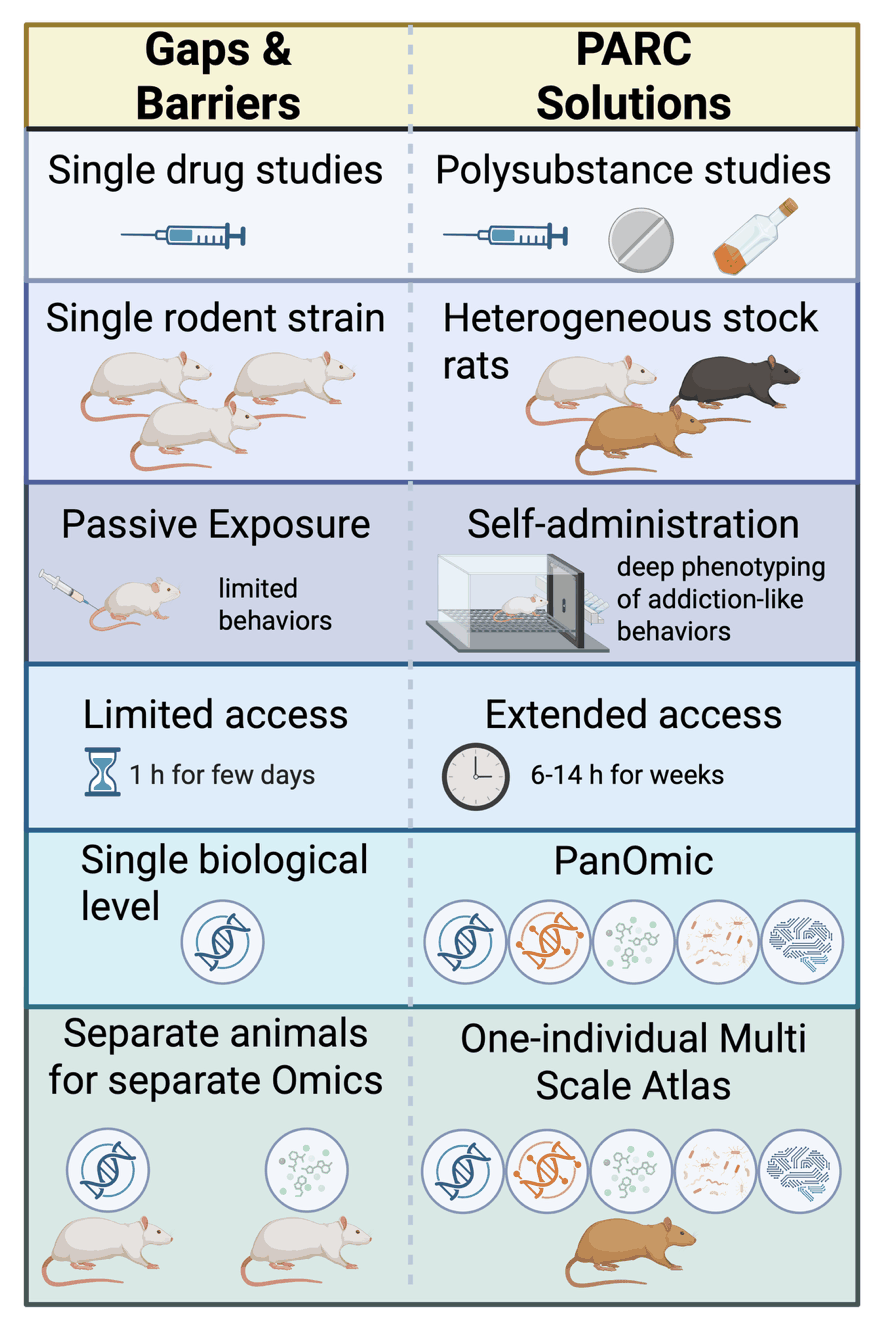
Addiction research has traditionally studied one drug, in one rodent strain, at one biological level. PARC was designed to remove those barriers systematically:
Experimental design
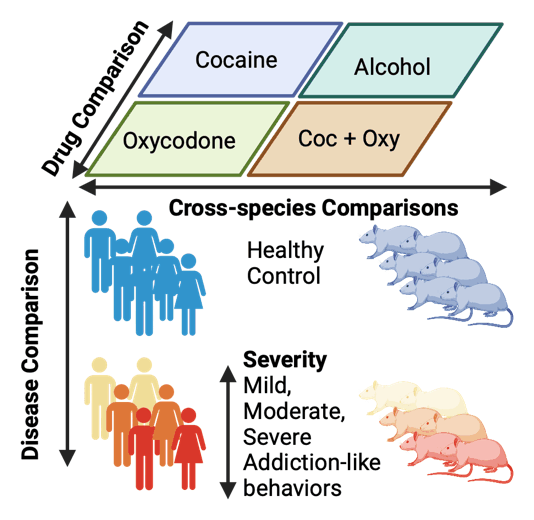
The center compares substances (cocaine, oxycodone, alcohol, and cocaine + oxycodone polydrug use), disease severity (from healthy controls to severe addiction-like behavior), and species (rat models against human datasets) within one integrated design:
Converging mechanisms, common targets
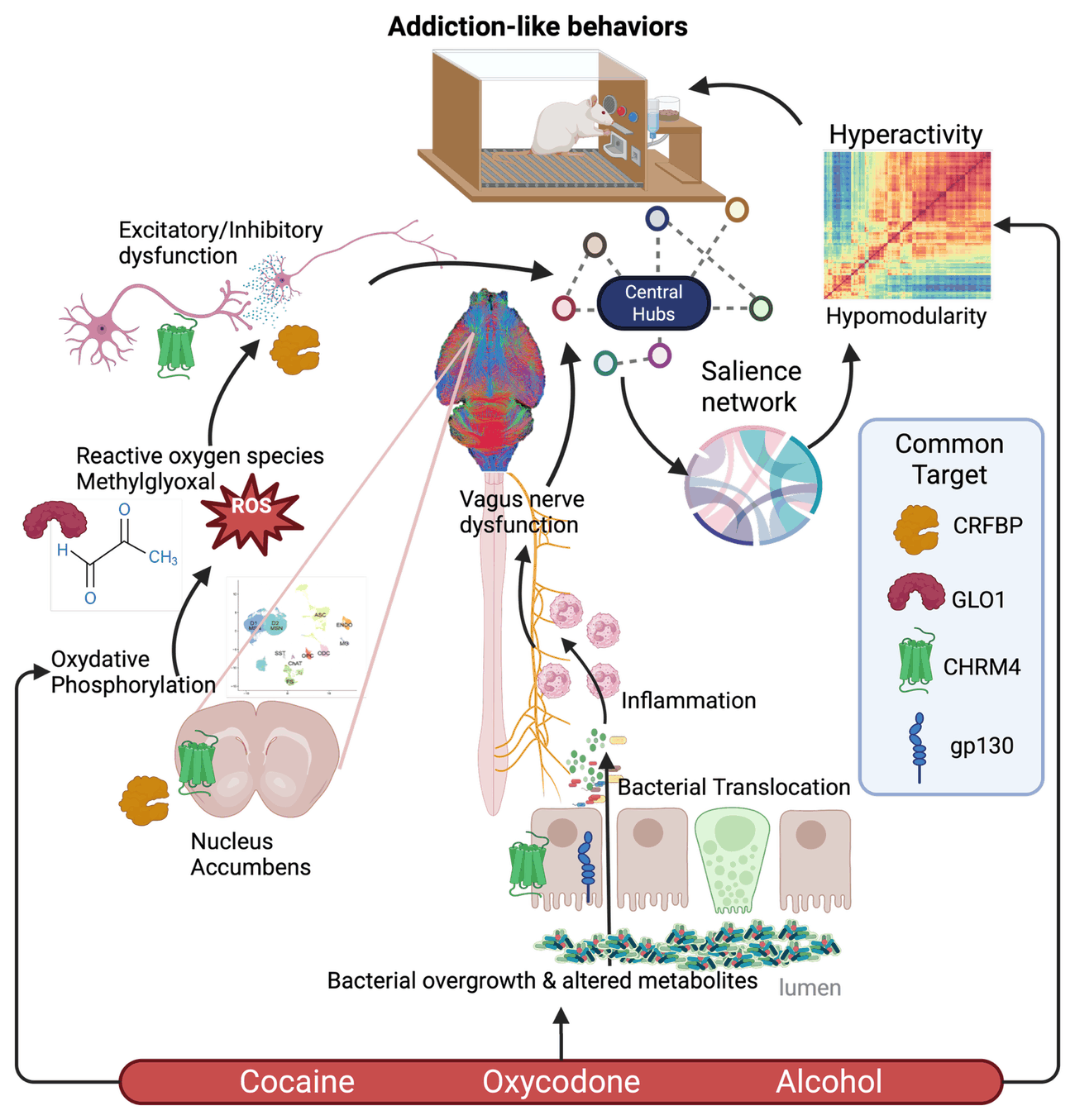
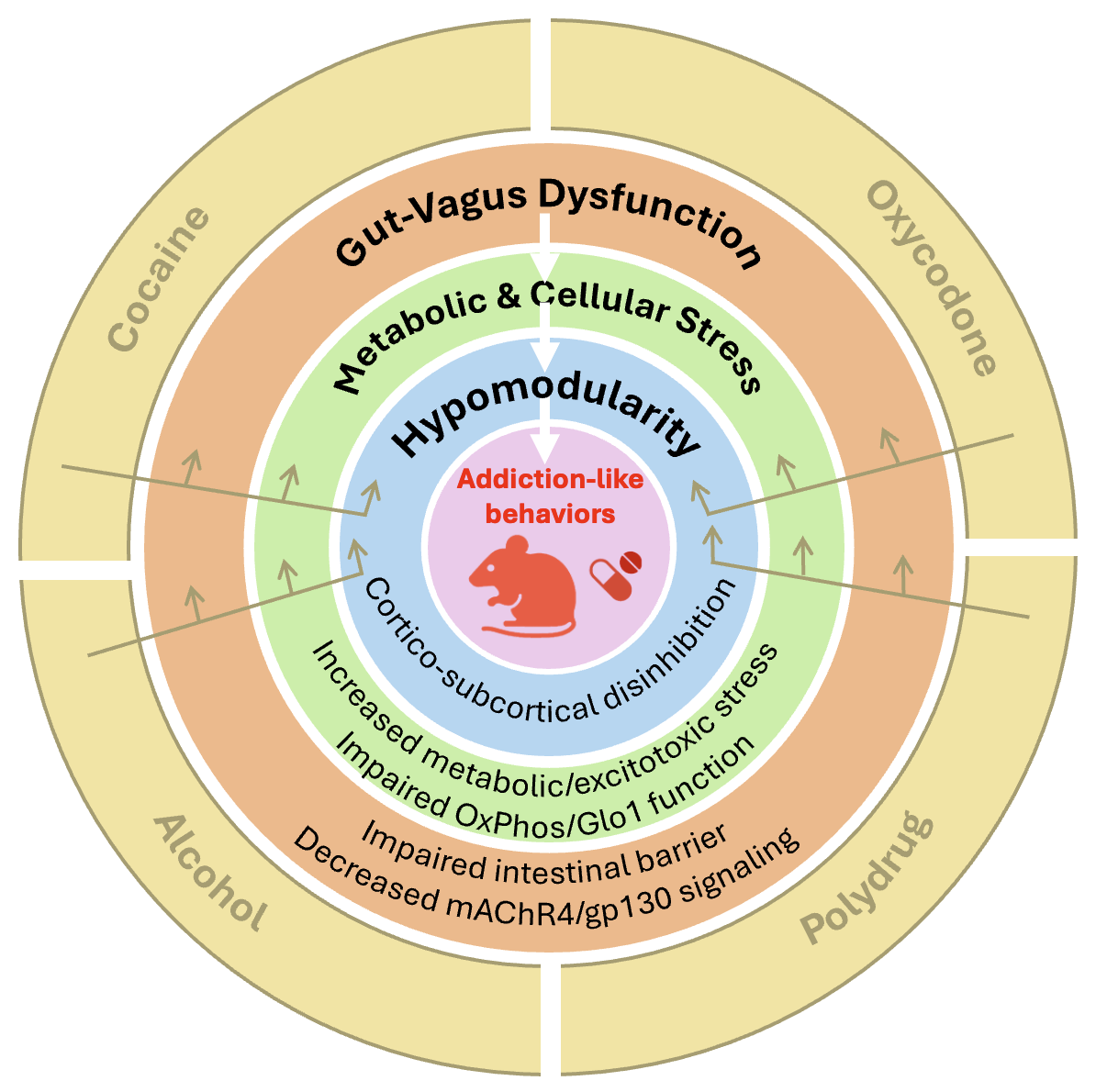
The projects converge on shared multiscale mechanisms, from gut–vagus signaling and metabolic stress to brain-network hypomodularity, and on common molecular targets studied across all three substances:
The projects are supported by the center's five cores and feed shared samples into the Addiction Biobank.