
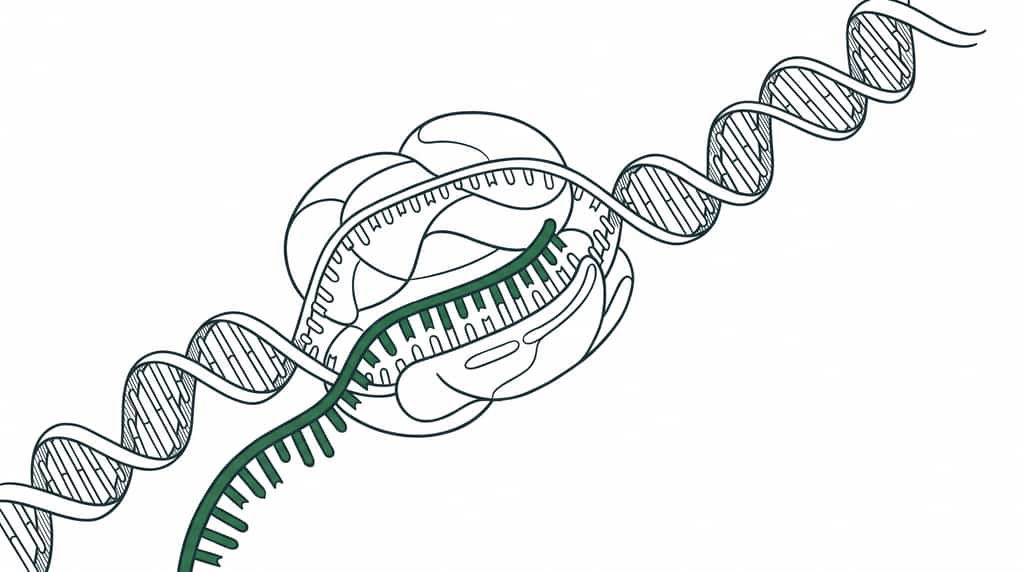
Every cell in the brain carries the same genome, but no two cell types use it the same way. A dopamine neuron, a GABAergic interneuron, an astrocyte, and a microglial cell each switch on a different repertoire of genes, a transcriptional program that defines what the cell is and does. The complete set of genes a cell expresses is its transcriptome, and reading it is called transcriptomics.
For decades, transcriptomics meant grinding up a chunk of tissue and measuring the average expression across millions of mixed cells, like judging a city by blending every conversation into one hum. Crucial signals were averaged away.
The single-cell revolution
That changed with droplet-based single-cell sequencing. Methods like Drop-seq encapsulate individual cells in microscopic droplets, tag each cell’s RNA with a unique barcode, and sequence everything at once, profiling the transcriptomes of thousands of individual cells in a single experiment (Macosko et al., 2015). Extensions of the approach can profile single nuclei from frozen tissue, measure chromatin accessibility (which regulatory switches are open), and map expression in intact tissue with spatial resolution.
Applied to the brain, single-cell methods answer a question bulk methods could not: when a disease changes gene expression, which cell types are responsible?
Why this matters for addiction
Addiction is a disorder of specific circuits and, within them, specific cell populations. Drugs of abuse trigger waves of gene-expression change, some acute, some persisting long into abstinence, and those changes differ radically between cell types that sit side by side in the same region.
Single-cell approaches let researchers:
- Pinpoint responsible cell types. Instead of “gene X changes in the amygdala,” we can say “gene X changes specifically in a rare population of inhibitory neurons.”
- Find the regulatory switches. Much of addiction’s genetic risk acts through enhancers, regulatory elements that control when genes fire. Mapping these networks has revealed, for example, a central role for stress-hormone-responsive enhancers in the gene networks underlying drug addiction (Duttke et al., 2022).
- Connect genetic risk to mechanism. A variant identified by GWAS becomes interpretable when you know which cell type expresses the gene it regulates, the bridge from statistical association to biological explanation.
What PARC’s transcriptomics project does
Our Brain Transcriptomics project applies single-cell and related genomic methods to the brains of genetically diverse rats phenotyped for addiction-like behavior toward alcohol, opioids, or cocaine, the same individuals whose brain networks and gut–brain signals are mapped by the center’s other projects.
Because behavior, genotype, and cell-type-resolved gene expression are measured in the same animals, the project can ask precisely the questions that matter:
- Which cell types’ programs distinguish vulnerable from resilient individuals?
- Which expression changes are shared across substances, and which are drug-specific?
- Which changes are cause (present before compulsive use emerges) and which are consequence?
The answers feed the center’s One-Individual Multiscale Atlas, and, through it, a shortlist of cell-type-specific targets for the next generation of addiction medicines.
References
- Macosko EZ et al. (2015). Highly parallel genome-wide expression profiling of individual cells using nanoliter droplets. Cell 161:1202–1214. PMID 26000488
- Duttke SH et al. (2022). Glucocorticoid receptor-regulated enhancers play a central role in the gene regulatory networks underlying drug addiction. Frontiers in Neuroscience 16:858427. PMID 35651629