
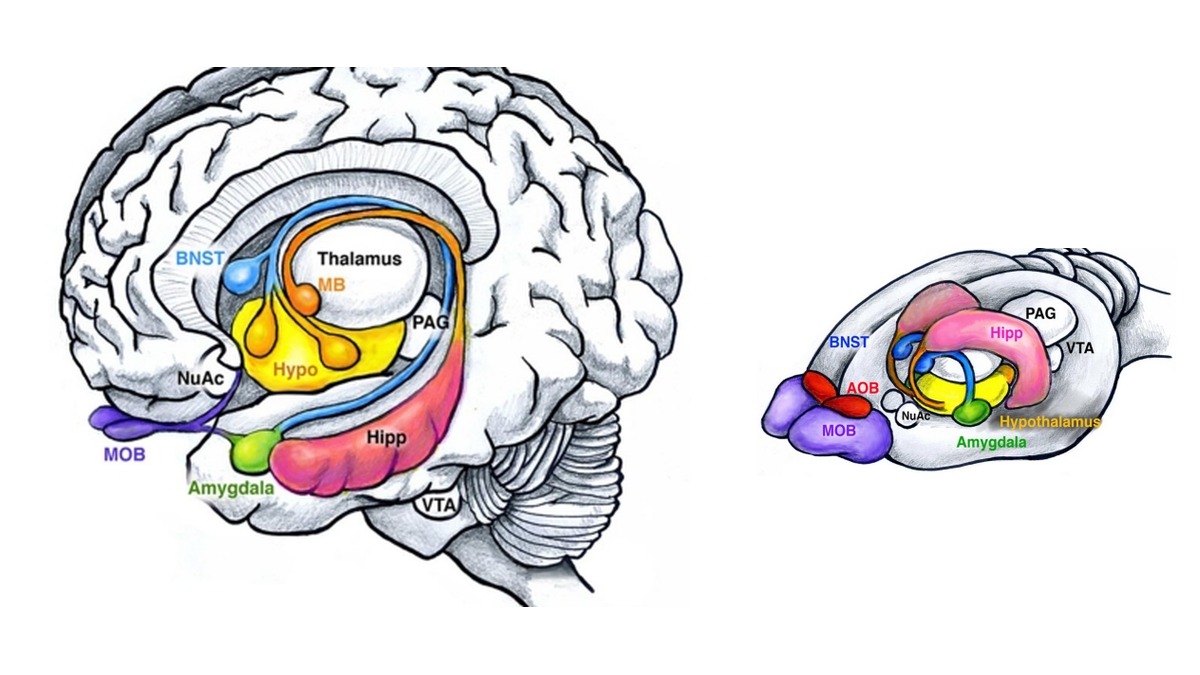
Few phrases in public health generate more argument than “addiction is a brain disease.” Advocates credit the framing with replacing moral judgment with medicine. Critics counter that people do recover, often without treatment, and that calling addiction a disease erases choice and circumstance. Both camps often argue against caricatures. What does the evidence actually support?
What the brain disease model claims
The model, articulated most influentially by the leadership of NIDA and NIAAA, makes a specific claim: chronic drug use produces lasting changes in brain circuits governing reward, stress, and self-control, and those changes explain the defining features of addiction: compulsive use, loss of control, and relapse long after withdrawal ends (Volkow et al., 2016).
The mechanistic evidence behind that claim is broad and reproducible:
- Dependence blunts reward circuitry and sensitizes stress systems, flipping drug use from pleasure-seeking to relief-seeking (the three-stage cycle; Koob & Le Moal, 1997).
- The changes are visible at every scale, gene expression, neuronal ensembles, and brain-wide network architecture (de Guglielmo et al., 2016; Kimbrough et al., 2020).
- Vulnerability is partly inherited: roughly half of addiction risk is genetic, and specific loci are now being mapped in humans and in genetically diverse animals (the genetics of addiction).
- In animals given identical drug access, only a biologically identifiable minority progresses to compulsive use, addiction-like behavior is a measurable phenotype, not a universal consequence of exposure (Deroche-Gamonet et al., 2004).
What the model does not claim
Properly stated, the brain disease model does not say that people with addiction cannot make choices, that recovery is impossible, or that environment is irrelevant. None of those claims survive contact with the data, most people with substance use disorders eventually recover, and social context powerfully shapes both risk and recovery.
The clearest way to hold it: addiction is a disorder in which brain changes progressively raise the cost of choosing otherwise. Choice remains, but it is no longer exercised on a level field. That is precisely why “just stop” works so poorly as medical advice, and why relapse is best understood as a symptom to manage rather than a moral failure (why relapse happens).
Fatalistic versus empowering neuroscience
A brain-based model can still emphasize choice, empowerment, flexibility, mindfulness, plasticity, and recovery. The popular counter-framing, that addiction is “not a brain disease” but a form of deep learning that better habits can undo, carries its own danger: it slides easily into “just make better choices,” which ignores the biological, social, economic, and individual realities of the disorder. It also discards a framing that has historically been essential for treatment development, insurance reimbursement, medical legitimacy, and stigma reduction. The real distinction is not brain disease versus choice; it is fatalistic neuroscience versus empowering neuroscience.
Why the framing matters
- Treatment. Diseases get medications, insurance coverage, and clinical infrastructure. The medications we have for opioid and alcohol use disorder exist because addiction was studied as a biological disorder.
- Stigma. Blame is the largest barrier keeping people from seeking help. Understanding vulnerability as biology, genes, circuits, development, reframes the person as a patient, not a culprit.
- Research. Treating addiction as a measurable biological phenotype is what makes rigorous science possible: you cannot map the genetics or circuitry of a moral failing, but you can map those of a quantifiable disorder, which is the daily work of our center.
The bottom line
“Brain disease” is shorthand, and like all shorthand it can mislead. The defensible scientific position is narrower and stronger: addiction involves real, measurable, partly heritable changes in brain function that constrain control over drug use, changes we can now observe from single cells to whole-brain networks, and increasingly, predict from biology measured before drug use ever begins.
References
- Volkow ND, Koob GF, McLellan AT (2016). Neurobiologic advances from the brain disease model of addiction. New England Journal of Medicine 374:363–371. PMID 26816013
- Koob GF, Le Moal M (1997). Drug abuse: hedonic homeostatic dysregulation. Science 278:52–58. PMID 9311926
- de Guglielmo G et al. (2016). Recruitment of a neuronal ensemble in the central nucleus of the amygdala is required for alcohol dependence. Journal of Neuroscience 36:9446–9453. PMID 27605618
- Kimbrough A et al. (2020). Brain-wide functional architecture remodeling by alcohol dependence and abstinence. PNAS 117:2149–2159. PMID 31937658
- Deroche-Gamonet V, Belin D, Piazza PV (2004). Evidence for addiction-like behavior in the rat. Science 305:1014–1017. PMID 15310906