

Center core
Behavioral Phenotyping Core
The Behavioral Phenotyping Core addresses critical gaps in substance use disorder research by providing standardized behavioral support, target validation, and preclinical testing using genetically diverse heterogeneous stock (HS) rats, which model the human-like polygenic variability of addiction vulnerability.
Leveraging advanced self-administration paradigms, the core analyzes biobanked samples from cocaine-, oxycodone-, and alcohol-exposed cohorts (more than 40,000 samples), quantifies addiction indices for every animal, and generates new polydrug (cocaine+oxycodone) datasets: integrating multi-omics, connectomics, and gut–brain signaling insights across all center projects.
Specific aims
- Behavioral testing and analysis: including polysubstance modeling and tailored studies for external demands, enabling cross-drug harmonization and FAIR-compliant datasets aligned with human GWAS.
- Molecular target validation: pharmacological and viral interventions during protracted abstinence, correlating behavioral outcomes (such as cue-induced reinstatement) with fMRI connectivity, transcriptomics, and gut–vagus mechanisms in polydrug-exposed rats.
- Medication development: screening novel compounds in high-vulnerability subgroups, prioritizing genetically regulated expression predictions to identify precision therapeutics.
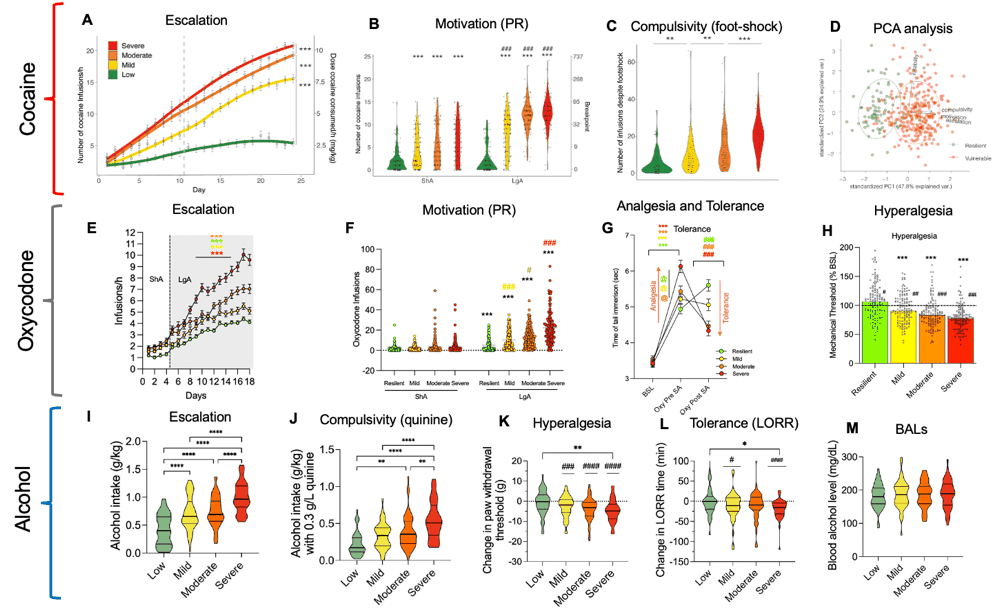 The core’s standardized pipeline quantifies escalation, motivation, and compulsivity for every animal across cocaine, oxycodone, and alcohol cohorts, classifying individuals from resilient to severe. (Figure from the Behavioral Phenotyping Core research strategy.)
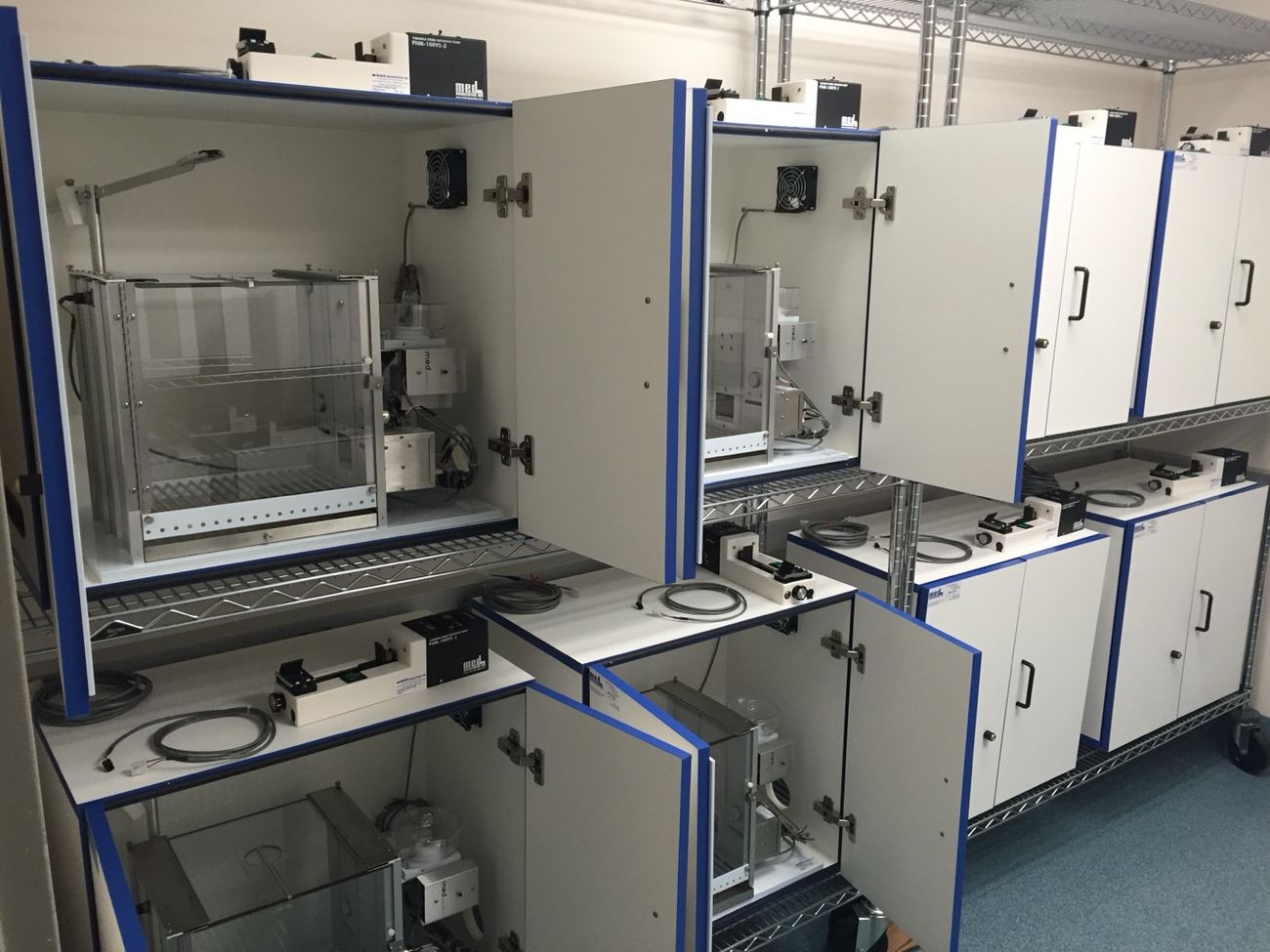
For background on these models, see the behavioral models guide.
Access this core
External investigators and companies can commission behavioral studies, target validation, and medication screening through the center’s preclinical testing services, or contact us to design a collaboration.
Core leadership
- Giordano de Guglielmo, PharmD, PhD, Associate Professor, Psychiatry
- Olivier George, PhD, Professor, Psychiatry